

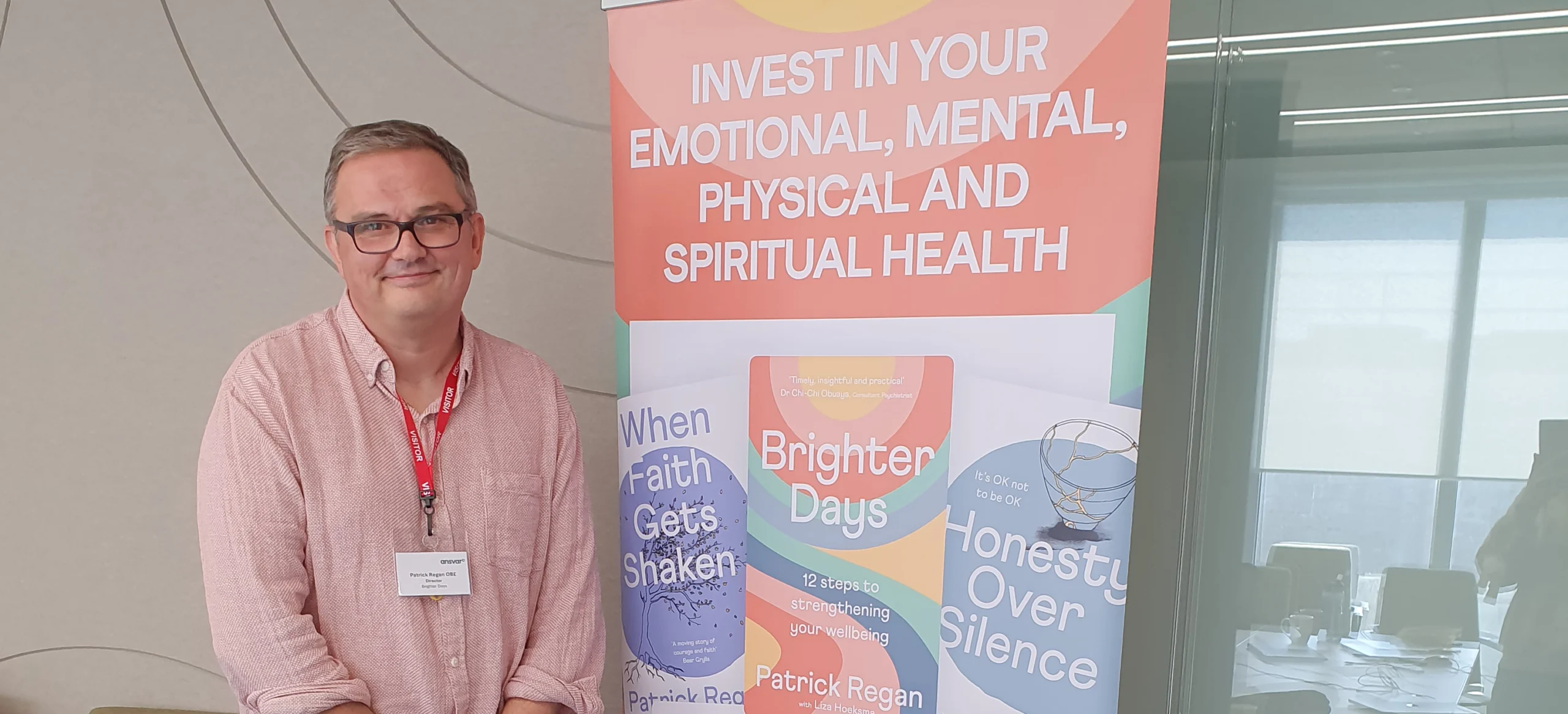
On 30th September, charity leaders, volunteers, and community advocates gathered for the third and final Community Hub event of the year.
The session was run by mental health campaigner and author Patrick Regan OBE who shared a powerful and deeply personal keynote message of resilience, empathy, and self-compassion.
Patrick Regan: A Journey Through Stress and Recovery
Patrick’s talk drew on his personal experience of burnout and recovery, and he shared how years of relentless charity work affected his own mental health.
His book Brighter Days, written in short, digestible sections, was born out of this experience. Designed for those struggling with mental health, it has found its way into schools, prisons, hospitals, and homes, offering practical tools for wellbeing and emotional support.
The Stress Bucket Exercise
One of the most engaging parts of the session was the “Stress Bucket” activity. Attendees were invited to draw a bucket and fill it with the pressures they face in charity work – funding challenges, safeguarding, emotional fatigue and team management, to name a few. The exercise highlighted the complexity of the work not-for-profits undertake and the emotional toll it can take.
To counterbalance the stress, participants added a “tap” to their buckets – representing strategies to release pressure. These included:
- Delegation and prioritisation
- Time outdoors and fresh air
- Asking for help
- Writing things down
- Practicing gratitude
- Setting boundaries
- Taking annual leave
- Clinical supervision
Understanding Empathy and Compassion
Patrick explored the difference between cognitive empathy (understanding someone’s perspective) and emotional empathy (absorbing their pain). He warned against becoming a “sponge” for others’ trauma, which can lead to burnout, and instead encouraged compassionate leadership – where kindness becomes a verb and a powerful antidote to stress.
The Cost of Victory
Patrick also introduced the concept of a Pyrrhic victory – winning at such a high cost that it undermines the purpose. He challenged attendees to reflect on their own victories: Are they sustainable? Are they worth the emotional toll?
Resilience Framework
Patrick presented a model of stress zones:
- Chill Zone – Rest and recovery
- Workout Zone – Healthy stress and productivity
- Stretch Zone – Temporary pressure
- Strain Zone – Risk of burnout
- Burnout Zone – Long-term recovery required
He emphasised the importance of recognising these zones and adjusting workloads and expectations accordingly.
Small Steps for Big Change
Patrick’s mantra – Start Small, Create Space, Think Differently – underscored the importance of rhythm, boundaries, and self-compassion.
Practical Tools for Wellbeing
He encouraged attendees to practice:
- Breathwork (e.g. box breathing) to regulate the nervous system
- Self-compassion as a discipline, not indulgence
- Boundaries as a form of freedom and sustainability
- Gratitude practices to shift perspective
- Circle of control exercises to reduce overwhelm
- Creating space for creativity to avoid burnout and foster innovation
The event concluded with a short video reminding everyone that asking for help is not weakness – it’s courage. Patrick’s final message was clear: “You are loved and important. You bring to this world things that no one else can.”
